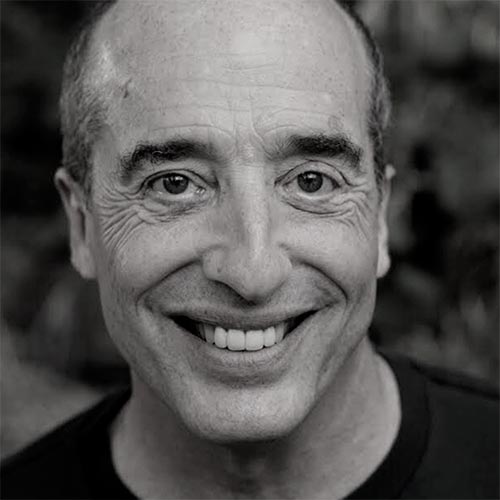
Terry Patten

Flying Lessons: Living and dying through the eyes of wonder

I knew Terry Patten, beloved author, mentor and teacher for so many, and I didn’t know him.

Inspired by the clarity of his teachings, his honesty and his almost translucent heart, I reached out to him several times over the years. First an interview, then a query about this or that, proposals for spiritual initiatives of one kind or another. Finally, with much trepidation, inquiring into the possibility of his writing some words of support for my book. Each and every time, he responded with such love and fraternity that he left me speechless.

I have loved his workshops, our conversations, and I felt exhilarated at the scope and inspiration in his treasure trove of a book, “A New Republic of the Heart. An Ethos for Revolutionaries”. I have followed his social experiment with curiosity and admiration, as I embarked on my own, a continent away. So why do I say I didn’t know him?

Because a person’s deepest character truly emerges when life puts them up against a wall, an all-or-nothing situation like the terminal cancer diagnosis he faced on the day of his 70th birthday, in April of this year. 

I was not surprised that he communicated this news right away, and told all of us (the ones he shared his life with, and those of us who followed him from afar), that he was surprised and moved by this turn of events, of course, that he would do what he could to heal himself, but that he did not in any way plan to renounce his love and wonder at the immeasurable beauty of existence.

As the months wore on and the illness advanced, beyond all medical attempts to stop it, it became clear that he would remain true to his word. His reports (that were then lovingly continued by his dear friend, and former wife, Deborah) shared his reflections, the harshness of some of the treatments, and the ways in which he found his way back to love and wonder, each and every time. 

Over the last weeks, he and some of his close friends offered a series of workshops, aptly named “Brightening every darkness”, which focused on a spiritual approach to dealing with our personal and collective mortality.  

Here are some highlights from his inspired talk with Craig Hamilton: 

“Early on, reading on other people’s cancer journeys, I came across many references to “the battle against cancer”. Right away I knew that that would not be my truth, that ‘Terry ego’ battling it out. Turning it into an effort turns it into something I can succeed or fail at, it enlists egoic motivations and fears, and it creates a wrong relationship to the wonder of the whole process.”

“I have found that every moment presents a different challenge. Some moments are all about making space for the discomfort of the treatments and trying to hold that bigger, wider context, and at other times I have felt so buoyant, so graced, it almost feels like the happiest time of my life.”

“In many moments, being closer to tears has been the measure of my groundedness. They’re tears of grief and of gratitude, and they’re not even distinguishable. It’s broken hearted, but also… heartened! There’s a power there, oddly. I don’t feel collapsed in those tears, I feel more available.”

“I’ve been discovering that I am invoking, and not just casually, during many moments, the sense of dwelling in the sense that I am coinciding more completely with the totality of reality, what David Bohm called “the whole movement”. Whatever somebody seems to do, it’s not really separable from the total world process, and affirming life. (…) I want to be a source of sanity and love for other people, so that they can be too; this pulse of blessing that can replicate itself. I felt that way before my cancer diagnosis, but it’s like a sensory experience that is new now.” 

“It’s also been a voyage in my relationship to myself. I’ve gotten to meet myself, know myself and love myself in new ways. I treasure my contact with other people, for sure, but I’m treasuring myself too. And I think there’s a growing ability to be present in little things. Noticing and being present for subtleties. I walk up a hill next to my home as part of my morning routine, but during this time I have not had the strength to scamper up the hill, I’ve had to walk very slowly and stop and rest and catch my breath. And yet the practice is to really be in that foot that is taking that small step slowly, and that next foot, and this capacity to get really appreciative of the smallest things, and not craving extraordinary ‘thises’ or ‘thats’. And I don’t even have to think about it. There’s something about being with these lessons in a wordless way. I can notice the opportunities, and participate in a more creative way.”

“There are moments in which the heaviness of my symptoms or the things that are hard are more prominent, and then at times it is like accepting this amazing gift of this robust and pretty stable intuition of my real identity, non separate, full of love and happiness, and very free.”

His eyes light up as he speaks these last words, and the real Terry, the one he’s been all along, shines through with piercing force.

So perhaps none of us -Terry included- really knew what his tender soul and giant heart were capable of, until he was faced with the task of letting every mask fall away.

I feel blessed to have been a witness to this deepening, and honored beyond words to have been able to call him a friend.

“You did good, sister!”, was his generous response to my book, in one of the last emails we exchanged.

No words could suffice to speak my praise, my awe, my gratitude.

But these will have to do: “You did amazing, brother!”

F.F.
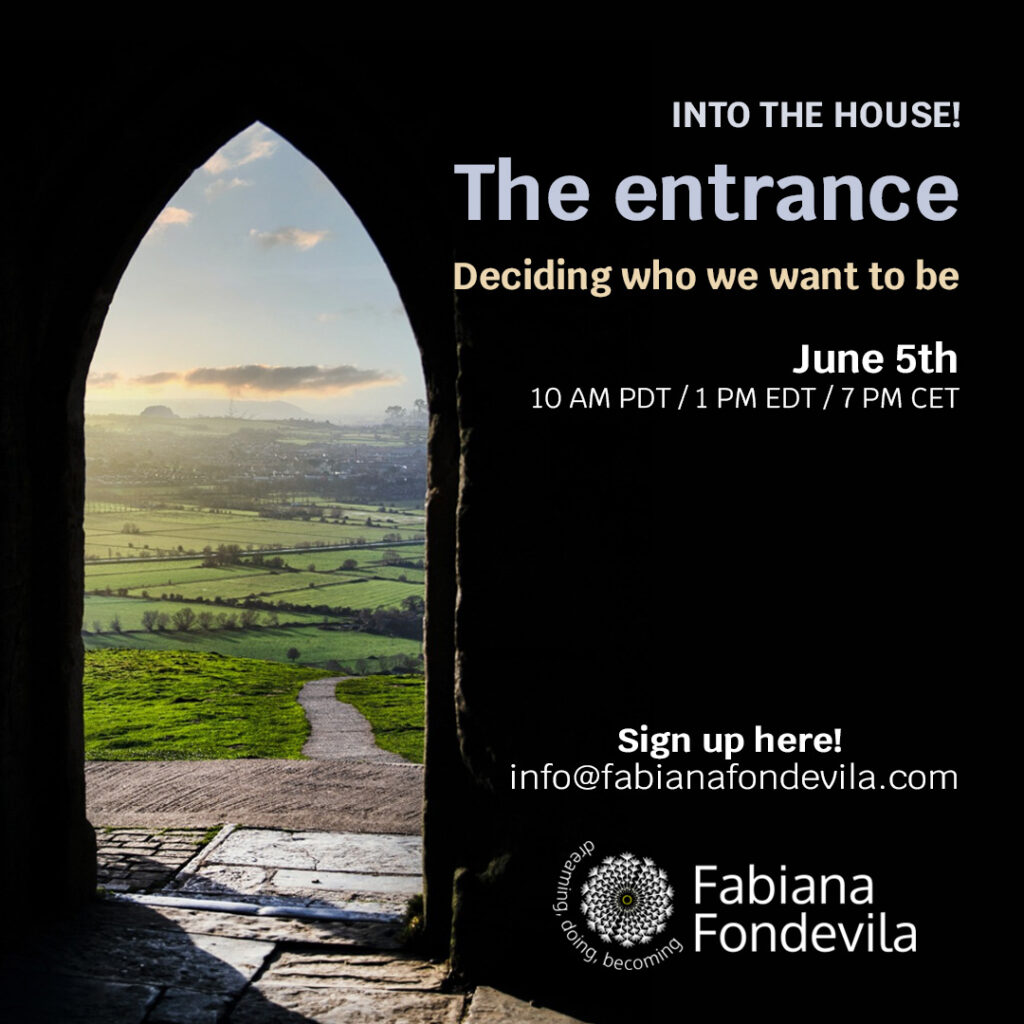
The entrance

The entrance

The entrance

Choosing Who We Want to Be

Who are we? Which of our names, distinctions, characteristics, make up our “identity” in the face of others? How much can we modify our habits and behaviours, and decide whom we want to be? What do science, philosophy and the wisdom traditions know about our freedom to shape our way of showing up in the world? 

Tuition: sliding scale of $ 24 to $ 54 (U$D), to fit all budgets.

If you have any questions, please write me at info@fabianafondevila.com


June 5th, 10 AM PDT / 1 PM EDT / 7 PM CET

Sign up here!

Error: Contact form not found.

Be the light! Birthing the new world together

2020 was a whirlwind of emotions and unexpected challenges, and its effects are far from over. Everything we took for granted collapsed in a matter of months, and made it very clear that the rules and structures that have governed the world we know are no longer operative, or even desirable. The pandemic pulled the veil off our eyes and forced us to face systemic injustice, violence, social and economic disparities, and the profound desecration of the planet we call home.

In order to create the new world, we will need to gradually replace “power over” (based on coercion, fear and control) with “power with” (born of collaboration, solidarity and mutual support, “power to” (our agency to shape our life and our world” and “power within”, which stems from self-knowledge and self-worth.

We will need new ways to relate to each other, to our governance, to the way we envision and embody our relationship to Nature and our immediate environment. But we need not consider this a tragedy. It is, in fact, an invitation. Said Ursula K. LeGuin: “Love doesn’t just sit there, like a stone, it has to be made, like bread; remade all the time, made new.” This is the very unique and beautiful challenge we face.

This task will require the best that each of us has to give: the new world cannot be built by a few enlightened leaders showing the way, but by each one of shining our own individual light, in every way possible.

Thus, the name of this course, which comes at a turning point for humanity. We need to find our way back to purpose, meaning, vocation, so that we can be beacons of light we need, for ourselves and for each other. “Lighthouses don’t go running [around] looking for boats to save; they just stand there shining”, wrote author Anne Lamott; that is what precisely what we will seek to do, together.

The metaphor which will guide our exploration will be that of a house, an ancient symbol of the self. And not just any house: one that is open to the elements, in constant dialogue with the environment, and in perpetual change and motion, almost like a desert tent. At night a new wind blows in and rearranges the furniture, uncovers rooms where there were none, reveals new textures and countours.

We will walk through the rooms of this house one at a time, and turn on the light. At the end, we will find ourselves in a house that is lit from within. In other words, a house that is inhabited, animated, enchanted, fully alive!

This is the map we will follow:

1. The Territory.  The universe, the infinite game.

What is the nature of the reality we inhabit? Do we live in a world of pure, finite matter? Or is there layer upon layer of mysteries to discover? What is the essence of the game we are playing? Is there room in our lives for the infinite? What everyday practices can connect us to it?

2. The Garden. The more than human world, the path of belonging.

How much intimacy do we experience with nature? How close do we feel to the trees, the clouds, non-human animals? How much do we know of the life cycles of the “green nation”, as some American Indian traditions refer to trees and plants? How much we know about the species that surround us? What is the depth of our dialogue with our inner wildness?

3. The Entrance: Choosing who we Want to Be.

Who are we? Which of our names, distinctions, characteristics, make up our “identity” in the face of others? How much can we modify our habits and behaviours, and decide whom we want to be? What do science, philosophy and the wisdom traditions know about our freedom to shape our way of showing up in the world? 

4. The Kitchen. Emotions, the alchemy of the heart.

What are emotions, and what do they bring to our lives? What is the role of afflictive emotions (fear, anger, sadness, jealousy, shame, envy), and how can we befriend them and benefit from their intelligence? What is the neurobiology of emotions? Can our emotions act as a bridge to spirituality? How do we form an intimate bond with our own heart? 

5. The Basement. Myths, shadow, ancestral forces.

What awaits us in the “invisible” worlds that lie under ground, in the watery depths, below the level of consciousness? What did shamans go in search of in their forays into “the lower world”? What can we find there, if we dare visit? What luminous forces lie in wait in the deepest darkness? What can we learn from what we never see? 

6. The Bathroom. Cleansing and renewal.

In what ways do we ignore the animal that carries us through life and affords us a wealth of experiences and sensations? How can we enter this sanctuary of the body, in which we recognize ourlselves as we are, without masks or disguises? What balms can we offer ourselves, as warm and as soothing as an oil-scented bath? How do we give back to our time-weary body some of the love it bestows us? 

7. The Bedroom. Dreams, intimacy, eroticism.

Do we practice the deep surrender that is the anteroom for rest, for moonlight sails through the land of dreams, for the blissful mingling of bodies and souls? How do we gain back the erotic view of life we had as children? How do we help Eros (vital force) and Psyche (soul) enjoy their sensual embrace?

8. Doorways. Rites of passage.

Do we honor the cyclical transitions in our lives? Do we stop to receive the night, winter, spring, dawn? Do we hear the murmurrings in our interior when we enter a new stage, end a relationship, move, have children, grow old? What is the quality of the ceremonies we enact, consciously or unconsciously? What are the new rituals that want to be born?

9. The Living Room. Relating to others, doing our part for the world.  

How large is our family? Does it only encompass those with whom we are tied by blood, frienship, work? What is our relationship to the rest of the world? Do we allow ourselves to be touched and moved by the pains, joys and aspirations of the “strangers” we run across in the street, read about in the paper, intuit across space and time? How do we want to contribute to our striking, tumultuous world that is always on the edge of the abyss? Can we dance with others, cry with others, celebrate with others in our common home? What is the crucial and dynamic relationship between inner work and work in the world?

10. The Stairs. The higher stages of human development.

Do we stop growing and developing when we become adults? Is “adulthood” a closed category, or does it include steps and stages? What is the difference between “states” and “stages”? What higher stages of development are available for us, and what teachings and practices allow us to fulfill that aspiration?

11. The Altar. Silence and solitude.

Do you devote quality time to your spirit Do you have a place to go to sit in silence, meditate, write, pray, or practice your brand of contemplation? Do you make time for connecting with your being, and enjoying the sea of calm it can offer? What practices could you incorporate to embroider an oasis of contentment into your every day?

12. The Terrace. Spirit, Self, Supra-consciousness.

What is the “Supra-Consciousness” (or Super Consciousness) aspect of our selves, which holds the visions and intuitions that emanate from our essence? How well do we know it? Do we allow ourselves to experience then freedom and lightness it offers? Do we channel some of its light and spaciousness into our daily affairs, our relationships, our vocations? Do we participate, in other words, in the Infinite Game?‘

When: Once a month (the dates will be announced with two weeks notice). Important: Each workshop is a condensation of the Spanish-language course, which devotes four weekly meetings to each station. Thus, you will receive one month’s worth of practices and questions and ideas in one sitting, plus the video and notes to explore and delve deeper on your own. Although participating in all the different “stations” of the house is recommended,they can be taken separately.

When: Every first Saturday of the month.

Format: Virtual, via Zoom. Recordings and notes are sent after each workshop.

Duration: 2 hours.

Tuition: Sliding scale: 24 U$D to 54 U$D. (Do reach out if this is not a possibility for you, so we can discuss an alternative) 

Sign up here!

Error: Contact form not found.

podcasts - Where Wonder Lives

Eudaemonia Podcast: Wonder, with Fabiana Fondevila

Fabiana Fondevila is a writer, speaker, ritual maker and teacher, helping individuals bring forth their best selves with wonder and enthusiasm. Fabiana’s new book is titled, “Where Wonder Lives. Practices for Cultivating the Sacred in Your Daily Life”. In this episode, Kim Forrester connects with Fabiana to discuss the power of amazement and awe, and to learn how a sense of wonder can help us flourish in life.


www.eudaemoniapod.com
Video background: https://dreambackgrounds.com/

Be the light! Birthing the new world together

2020 was a whirlwind of emotions and unexpected challenges, and its effects are far from over. Everything we took for granted collapsed in a matter of months, and made it very clear that the rules and structures that have governed the world we know are no longer operative, or even desirable. The pandemic pulled the veil off our eyes and forced us to face systemic injustice, violence, social and economic disparities, and the profound desecration of the planet we call home.

In order to create the new world, we will need to gradually replace “power over” (based on coercion, fear and control) with “power with” (born of collaboration, solidarity and mutual support, “power to” (our agency to shape our life and our world” and “power within”, which stems from self-knowledge and self-worth.

We will need new ways to relate to each other, to our governance, to the way we envision and embody our relationship to Nature and our immediate environment. But we need not consider this a tragedy. It is, in fact, an invitation. Said Ursula K. LeGuin: “Love doesn’t just sit there, like a stone, it has to be made, like bread; remade all the time, made new.” This is the very unique and beautiful challenge we face.

This task will require the best that each of us has to give: the new world cannot be built by a few enlightened leaders showing the way, but by each one of shining our own individual light, in every way possible.

Thus, the name of this course, which comes at a turning point for humanity. We need to find our way back to purpose, meaning, vocation, so that we can be beacons of light we need, for ourselves and for each other. “Lighthouses don’t go running [around] looking for boats to save; they just stand there shining”, wrote author Anne Lamott; that is what precisely what we will seek to do, together.

The metaphor which will guide our exploration will be that of a house, an ancient symbol of the self. And not just any house: one that is open to the elements, in constant dialogue with the environment, and in perpetual change and motion, almost like a desert tent. At night a new wind blows in and rearranges the furniture, uncovers rooms where there were none, reveals new textures and countours.

We will walk through the rooms of this house one at a time, and turn on the light. At the end, we will find ourselves in a house that is lit from within. In other words, a house that is inhabited, animated, enchanted, fully alive!

This is the map we will follow:

1. The Territory.  The universe, the infinite game.

What is the nature of the reality we inhabit? Do we live in a world of pure, finite matter? Or is there layer upon layer of mysteries to discover? What is the essence of the game we are playing? Is there room in our lives for the infinite? What everyday practices can connect us to it?

2. The Garden. The more than human world.

How much intimacy do we experience with nature? How close do we feel to the trees, the clouds, non-human animals? How much do we know of the life cycles of the “green nation”, as some American Indian traditions refer to trees and plants? How much we know about the species that surround us? What is the depth of our dialogue with our inner wildness?

3. The Entrance: Choosing Who We Want to Be.

Who are we? Which of our names, distinctions, characteristics, make up our “identity” in the face of others? How much can we modify our habits and behaviours, and decide whom we want to be? What do science, philosophy and the wisdom traditions know about our freedom to shape our way of showing up in the world? 

4. The Kitchen. Emotions, the alchemy of the heart.

What are emotions, and what do they bring to our lives? What is the role of afflictive emotions (fear, anger, sadness, jealousy, shame, envy), and how can we befriend them and benefit from their intelligence? What is the neurobiology of emotions? Can our emotions act as a bridge to spirituality? How do we form an intimate bond with our own heart? 

5. The Basement. Myths, Shadow, Ancestral Forces.

What awaits us in the “invisible” worlds that lie under ground, in the watery depths, below the level of consciousness? What did shamans go in search of in their forays into “the lower world”? What can we find there, if we dare visit? What luminous forces lie in wait in the deepest darkness? What can we learn from what we never see? 

6. The Bathroom. Cleansing and Renewal.

In what ways do we ignore the animal that carries us through life and affords us a wealth of experiences and sensations? How can we enter this sanctuary of the body, in which we recognize ourlselves as we are, without masks or disguises? What balms can we offer ourselves, as warm and as soothing as an oil-scented bath? How do we give back to our time-weary body some of the love it bestows us? 

7. The Bedroom. Dreams, Intimacy, Eroticism.

Do we practice the deep surrender that is the anteroom for rest, for moonlight sails through the land of dreams, for the blissful mingling of bodies and souls? How do we gain back the erotic view of life we had as children? How do we help Eros (vital force) and Psyche (soul) enjoy their sensual embrace?

8. Doorways. Rites of Passage.

Do we honor the cyclical transitions in our lives? Do we stop to receive the night, winter, spring, dawn? Do we hear the murmurrings in our interior when we enter a new stage, end a relationship, move, have children, grow old? What is the quality of the ceremonies we enact, consciously or unconsciously? What are the new rituals that want to be born?

9. The Living Room. Relating to Others, Doing our Work in the World.  

How large is our family? Does it only encompass those with whom we are tied by blood, frienship, work? What is our relationship to the rest of the world? Do we allow ourselves to be touched and moved by the pains, joys and aspirations of the “strangers” we run across in the street, read about in the paper, intuit across space and time? How do we want to contribute to our striking, tumultuous world that is always on the edge of the abyss? Can we dance with others, cry with others, celebrate with others in our common home? What is the crucial and dynamic relationship between inner work and work in the world?

10. The Stairs. The Higher Stages of Human Development.

Do we stop growing and developing when we become adults? Is “adulthood” a closed category, or does it include steps and stages? What is the difference between “states” and “stages”? What higher stages of development are available for us, and what teachings and practices allow us to fulfill that aspiration?

11. The Altar. Silence and Solitude.

Do you devote quality time to your spirit Do you have a place to go to sit in silence, meditate, write, pray, or practice your brand of contemplation? Do you make time for connecting with your being, and enjoying the sea of calm it can offer? What practices could you incorporate to embroider an oasis of contentment into your every day?

12. The Terrace. The Self, Supra-consciousness.

What is the “Supra-Consciousness” (or Super Consciousness) aspect of our selves, which holds the visions and intuitions that emanate from our essence? How well do we know it? Do we allow ourselves to experience then freedom and lightness it offers? Do we channel some of its light and spaciousness into our daily affairs, our relationships, our vocations? Do we participate, in other words, in the Infinite Game?‘

When: The first Saturday of each month. Important: Each workshop is a condensation of the Spanish-language course, which devotes four weekly meetings to each station. Thus, you will receive one month’s worth of practices and questions and ideas in one sitting, plus the video and notes to explore and delve deeper on your own. Although participating in all the different “stations” of the house is recommended, they can be taken separately.

Next station: The Bedroom! September 4th, 10 AM PDT / 1 PM EDT / 7 PM CET.

Format: Virtual, via Zoom. Recordings and notes are sent after each workshop.

Duration: 2 hours. We also have a Whatsapp group where participants can pose questions and exchange experiences in between the monthly workshops.

Tuition: Sliding scale: U$D 24 to U$D 54. This allows most people to access the course, and anyone who is able to so, to it pay forward, generously fostering inclusivity. (However, if this is still out of your reach, do contact me to adjust to your possibilities)

Sign up here!

Error: Contact form not found.

Cultivating the Sacred in Your Daily Life

Cultivating the Sacred in Your Daily Life

How can we cultivate the sacred in our daily lives – and what does that really even mean? Fabiana Fondevila gives us the low-down

by Fabiana Fondevila
Cultivating the Sacred in Your Daily Life

Many of us have grown up to identify ‘the sacred’ with moments of prayer, religious songs or ceremonies, acts that take place on specific holy days of the week or the year. Indeed, in its origins, ‘sacred’ was what happened inside a church, and profane was everything that took place outside its portal.

But ‘sacred’ really means ‘to consecrate, to immortalise, to dedicate, to make holy, to set apart’. So the question is: What is truly holy in your life?

If you are like me, perhaps you find in Nature an infinite supply of solace, peace, enchantment and wonder. Or maybe you light up with certain kinds of music, art, architecture or landscapes. Perhaps you are moved to your core by the conversations you have with your loved ones, or stilled into silence by reading a perfect poem. Or it may be that witnessing or performing a great act of kindness is what truly brings you home.

Whatever it is that strikes a deep chord in your heart, whatever you hold in highest regard, that is your doorway into the sacred. And the way we humans have found to honour the sacred is to bless it with our love, time and attention.

How shall we go about doing this? Let us count the ways!

The ancient art of ritual

One time-honoured way is to create simple rituals to celebrate those moments that feel especially meaningful and transcendent.

What are rituals? One way to describe them is as symbolic acts that help embody transcendent truths and the emotions they evoke, such as awe, wonder, gratitude, compassion, forgiveness, joy.

Rituals do not have to be pre-planned, elaborate affairs. Sometimes, a simple candle and a few words of gratitude is all it takes to turn a regular weekday dinner with family into a time of communion.

Or, perhaps, it may happen that every time you pass a certain tree, which holds for you an important memory, you might bow to it slightly, or softly touch its bark. Such a subtle act would go unnoticed to an outside observer, but for you, the act would contain a world of meaning.

So, what does a ritual practice entail? These are some of the elements:

  • An intention. It could be to celebrate, honour or mourn a milestone or transition in someone’s life or, in its everyday version, to underscore the importance of a bond, an activity, a memory, a place.
  • A symbolic gesture or act to be performed, whether alone or with others. The gesture can be accompanied by a poem to read, a song to sing, movement or dance.
  • In more formal rites, it is important to mark a clear beginning and a clear end. Everyday rituals can evolve spontaneously and begin and end on their own.
  • But ritual is certainly not the only way to honour the sacred. A more straightforward (although not necessarily easier) approach is, simply, to pay attention.

The path of attention

‘Attention is the beginning of devotion,’ said the beloved American poet, Mary Oliver, and also: ‘This is the first, the wildest and the wisest thing I know: that the soul exists and is built entirely out of attentiveness’.

What did she mean by this? As a lifelong lover of nature, she trained herself in the art of paying attention. Her poems describe the minute movements of a bird’s wing, the subtle changes of colour as dawn breaks over the forest canopy, the startled look on a doe’s eyes as it stumbles upon the author behind some brush.

However, in her book of essays Long Life, she describes how she only really learned to pay attention with an open heart, letting what she was seeing affect her, after watching photographer Molly Malone, her partner of many years, go about her work.

This is what she said: ‘Attention without feeling, I began to learn, is only a report. An openness — an empathy — was necessary if the attention was to matter… Molly instilled in me this deeper level of looking and working, of seeing through the heavenly visibles to the heavenly invisibles’.

Here is the practice:

Whenever you find yourself undertaking an action that seems essential to your life –looking after your children, tending your garden, cooking a meal for your family, attempting to write or play a song, walking under an open sky: can you strive to see it all with fresh eyes?

This is not the same as pretending one is seeing it all for the first time, but, rather, looking beyond the ordinary into the extraordinariness of those people, places and moments, reaching for those ‘heavenly invisibles’.

Can you take a moment to let it all in, savour the grace that is expressed in and through the mundane, reminding yourself that no moment is eternal, nor comes back in its exact form?

This leads us straight into our final, and perhaps most important practice for honouring the holy.

Gratitude, the art of receiving

‘It is not happiness that makes us grateful. It is gratefulness that makes us happy’, says Brother David Steindl-Rast, who graced me with the gift of a preface for my book, Where Wonder Lives.

What is gratitude? It is the perception of receiving something value that does not come entirely from us. We might consider that the good things in our lives come from God, the universe, a certain degree of good fortune. Whatever the cause, as long as we are enjoying something we did not (or could not) pay for, work for, strive to obtain, then we are in the presence of grace, and the heart’s natural response to grace is gratitude.

However, though we may feel grateful spontaneously at different times of our lives, it is likely that go we for days without feeling it or thinking about our many reasons to be grateful.

When we take the people in our lives, our good health, or the colour of the sky for granted, we miss out on the opportunity to experience the kind of joy that comes from a grateful heart.

Here is the practice:

  • Start a gratitude journal. Every night write three things you are grateful for that day. Make them different every day, and specific.
  • Write a gratitude letter. Think of a benefactor (someone who influenced your life for the good or went out of their way to help you or teach you) and spell out your gratitude in a letter. If possible, read it to them looking at their eyes.
  • Practice ‘gratitude by omission’. Think of the many painful or bothersome things that could be happening right now and are not. For example: I could have a headache, I could be angry at someone, I could have just lost my job.
  • Give thanks for the little things, with as much feeling as you can muster. Don’t take for granted that server that remembered to bring you the ice your ordered, thank them with your eyes, your smile, your heart.

Paying attention, creating rituals, and practising gratitude are just a few practices that can help us keep the sacred up front and centre in our lives, where it belongs. May they be a source of sustenance in your life, and an expression of your deepest, wildest, and most abiding nature.

Published on kindredspirit.co.uk

AWE AS A ROAD TO ECSTASY

Awe as road to ecstasy

Are otherworldly sunsets a prerequisite to experiencing wonder and awe? Do we need to see the Grand Canyon or the Taj Mahal for our jaw to drop open and the hairs on the back of our arms to stand up? I think not.

What is awe? This important but long forgotten emotion has come into focus recently, mainly thanks to the research undertaken by Dacher Keltner (and others) at the Greater Good Science Center in Berkeley, California. They have defined awe as “the perception of something so vast (in size, number, dimension, quality) that it challenges our understanding of the world” and forces us to reframe our thinking. In other words, what we are witnessing, when in a state of awe, does not fit into our pre-existing lens, and so we need to reach for a larger frame of reference.

That is what our body seems to be doing when it responds to awe by taking in a deep breath, holding it for a moment, expanding our chests and our irises, and—for as long as the feeling lasts—inhabiting some kind of timeless present.

Awe and wonder are identical in all but one respect. Wonder arises in the face of something mysterious and overpowering but with a positive tint: a magnificent nature scene (the night sky, a waterfall, a mountain), a rapturous symphony, an uncanny sports feat, an act of sublime kindness. Awe, on the other hand, can arise when something is frightening as well as grand: a lightning storm, an earthquake, a tsunami, a Nazi parade. Awe doesn’t have to be scary, but it can be; wonder is always a delight!

Of course, words are just words, and we can describe this feeling with a host of other terms, such as amazement, astonishment, surprise, transcendence, or even “goose bumps”! And we are always talking basically about the same experience: coming into contact with that which is larger than us, something that is, in some way, unfathomable.

Why do we feel awe?

Studies have found that awe and wonder lead people to cooperate, share resources, and sacrifice for others (all of which are necessary for living in community). And some studies have found a specific link between awe and altruism: apparently, being in the presence of something vast calls forth a more humble, less narcissistic self, which enables greater kindness toward others.

This is how Keltner explains it: “In the course of our evolution, we became a most social species. We defended ourselves, hunted, reproduced, raised vulnerable offspring, slept, fought, and played in social collectives. This shift to more collective living required a new balancing act between the gratification of self-interest and an orientation toward supporting the welfare of others. Experiencing awe might have helped us make this shift. Brief experiences of awe redefine the self in terms of the collective and orient our actions toward the interests of others”.

But the effects of awe go even beyond altruism: it has also been associated with greater discernment (being able to tell faulty arguments from sound ones), improved health (by enhancing our immune system), and greater creativity (by helping us think “outside the box”).

AWE AS A ROAD TO ECSTASY

Aside from all of these very worthy and important repercussions, I believe awe and wonder can provide one more (and perhaps less studied) effect: it can serve as a doorway into ecstasy!

What is ecstasy? Merriam Webster defines it thus: “a state of being beyond reason and self-control”; “a state of overwhelming emotion, especially rapturous delight”; “a mystic or prophetic trance.” What is the common thread between all these different “tastes” or varieties of ecstasy? The answer lies in the etimology of the word. “Ecstasy” literally means “to stand outside oneself.”

Our ordinary state of consciousness is one of separate, autonomous individuality. This mindset is what allowed us to create the world we live in, to focus on tasks and achieve them, to respect boundaries (others and our own), and to deal with life’s myriad everyday tasks and affairs. But it has also left us feeling lonely, isolated, and even threatened by others (since the egoic mind tends to focus mainly on fulfilling its own interests and securing its own safety). And this has made for a very stressful and disconnected way of life.

Our ancestors who lived in tribal cultures tended to think of themselves as families, or even as single, multi-faceted organisms, and they had many practices (dancing, singing, drumming, ingesting visionary plants) that enhanced this perception and regularly helped bring them to a sense of oneness, not only with others in the tribe but also with the “more than human world”: other animals, the forces of Nature, life itself.

Modern civilization affords us few opportunities to catch a break from our small selves and to joyfully melt back, even for a moment, into the wholeness from which we came and into which we shall return.

Awe and wonder may well be our ticket back into that elated and embodied experience of oneness and transcendence. And we don’t even have to find or create a tribe to get there. In fact, from today’s integral perspective, the idea of a “tribe” only makes sense if we think of it encompassing all of humanity, and even all sentient beings. The evolution of consciousness has allowed us to expand our sense of kinship and to forge a sense of belonging that is truly boundless.

Unlike many religious or spiritual practices, wonder and awe do not require any particular beliefs, mantras, prayers, or special attire. We can choose to enter wonder wherever we are, whatever we are doing, by simply changing our mode of perception.

For example, one could be walking down the street, looking down at the ground, as we often do when lost in our own thoughts (and, by looking down, becoming more and more self-absorbed), and suddenly decide to shift perspective, and look up. Look up at what? At the sky, at the clouds, at the tops of buildings, at the tree canopy and the sun shining through it, at whatever happens to be displaying itself above our heads.

AWE AS A ROAD TO ECSTASY

This simple act helps us to connect to the larger world and to gladly relinquish our “small minded” thoughts, our obsession with our own specific set of problems and circumstances. We can couple this renewed perspective with a conscious change in our breathing; for instance, taking a few slow, deep breaths, intending to take in our surroundings with every inhale and to let go of what is not immediately important with the exhale. And some may find that adding the right kind of music will directly turn this conscious, open, and expanded walk into a full-on ecstatic experience.

Another practice that can help catapult us out of our everyday identities is this: stand outside (barefoot, if weather and situation permits) and stretch your arms wide open, while raising your face to the sky. Let your mouth relax into a smile, and make sure your forehead is uncreased. Every bit of you should be in a state of delightful expansion. You can also think of a question or something you need help with, and inhale slowly as you bring your arms up to the sky, stay there for a few moments, sensing for a tingling in your upturned palms, or arms, that signals circulating energy. Then very gently bring your arms back to yourself with a sweeping motion, as if your arms were moving through sludge (if you are sensitive you may, in fact, feel the resistance of the energy you are moving), and let them come to rest on your heart. Repeat as many times as you feel the need to.

Here are a few other practices that could help you spark moments of awe and wonder into your life without too much effort:

  • Seek out novel ways to do things. If your walk always tends to take you along a regular path, challenge yourself to choose alternate paths every day. Try out new recipes, new colors to wear, new fragrances, new music; wander away from the ordinary in any way you can!
  • See the ordinary with fresh eyes. When you go out into the night, imagine you are seeing the stars for the very first time. What would you say, what would you do, if this were the case? Would you go about your evening as if nothing were happening? Would you go back inside to watch TV? Or would you linger there, marveling at the crazy, spectacular show of lights?
  • Wonder about the people around you: the passersby on the street (as you perhaps did as a child or youngster), but also those closest to you. What don’t you know about your son, your daughter, your friend, your workmate, your partner? What might you ask them to help reveal a layer of themselves that is completely new? Or, perhaps, revel in the fact that there is so much in them you will never, ever know.
  • Put on earphones, crank up that song that makes you tingle with joy and abandon, and go all out. If you can dance outside, with the grass under your feet and the stars above you, imagine you are joining others as they honor the night and each other by moving as one single, pulsating, jubilant organism.
  • Let your mind wander into unexpected places: read about the limits (or lack thereof) of outer space, of life on the ocean floor, of matter in the center of the earth, of how your continent looked when dinosaurs roamed on it, of space travel and the first ocean voyages, of the unimaginable courage and thirst for adventure that is the hallmark of human kind.
  • Remember awe-inspiring moments in your life; write about them, tell about them, relive them in your imagination.
  • Watch movies or read biographies of great feats. Let the inspiration move you to conjure up bold, boundary-pushing dreams.
  • Read or write science fiction. Let your imagination bring you a glimpse of alternate universes that may very well come true (in some form) in your own lifetime.
  • Read some of the more far-out science out there, such as epigenetics, quantum physics, astronomy, and even psychology, which are always pushing the frontier of the possible.
  • Think in terms of deep time: not your lifetime but that of the earth, the solar system, the universe. Consider the time frame of mahakalpas (Sanskrit for “eons”) employed in Buddhist cosmology. One kalpa lasts approximately 16 million years, one “mahakalpa,” 1.28 billion years.
  • Challenge your view of yourself. We are not born with a set number of talents, assets, or characteristics, nor are we the net result of our experiences. Rather, we are what we make of what we have lived and received (both by upbringing or genetic inheritance). In other words, just as the universe appears to be unbounded, so are we. Not because we can literally do or be anything we want to be, but because we are free to define ourselves by our limitless imagination, and by the immeasurable vastness of our heart.

BY FABIANA FONDEVILA, published by innertraditions.com
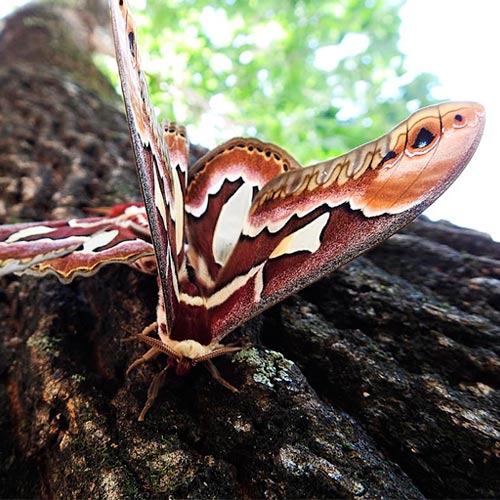
Photos by Miriam Posz. Find her work at @miriamposz