What I have learned so far

Meditation is old and honorable, so why should I
not sit, every morning of my life, on the hillside,
looking into the shining world? Because, properly
attended to, delight, as well as havoc, is suggestion.
Can one be passionate about the just, the
ideal, the sublime, and the holy, and yet commit
to no labor in its cause? I don’t think so.

All summations have a beginning, all effect has a
story, all kindness begins with the sown seed.
Thought buds toward radiance. The gospel of
light is the crossroads of — indolence, or action.

Be ignited, or be gone.

Mary Oliver

Mindful

Everyday
I see or hear
something
that more or less

kills me
with delight,
that leaves me
like a needle

in the haystack
of light.
It was what I was born for —
to look, to listen,

to lose myself
inside this soft world —
to instruct myself
over and over

in joy,
and acclamation.
Nor am I talking
about the exceptional,

the fearful, the dreadful,
the very extravagant —
but of the ordinary,
the common, the very drab,

the daily presentations.
Oh, good scholar,
I say to myself,
how can you help

but grow wise
with such teachings
as these —
the untrimmable light

of the world,
the ocean’s shine,
the prayers that are made
out of grass?

Mary Oliver

From “Why I Wake Early”

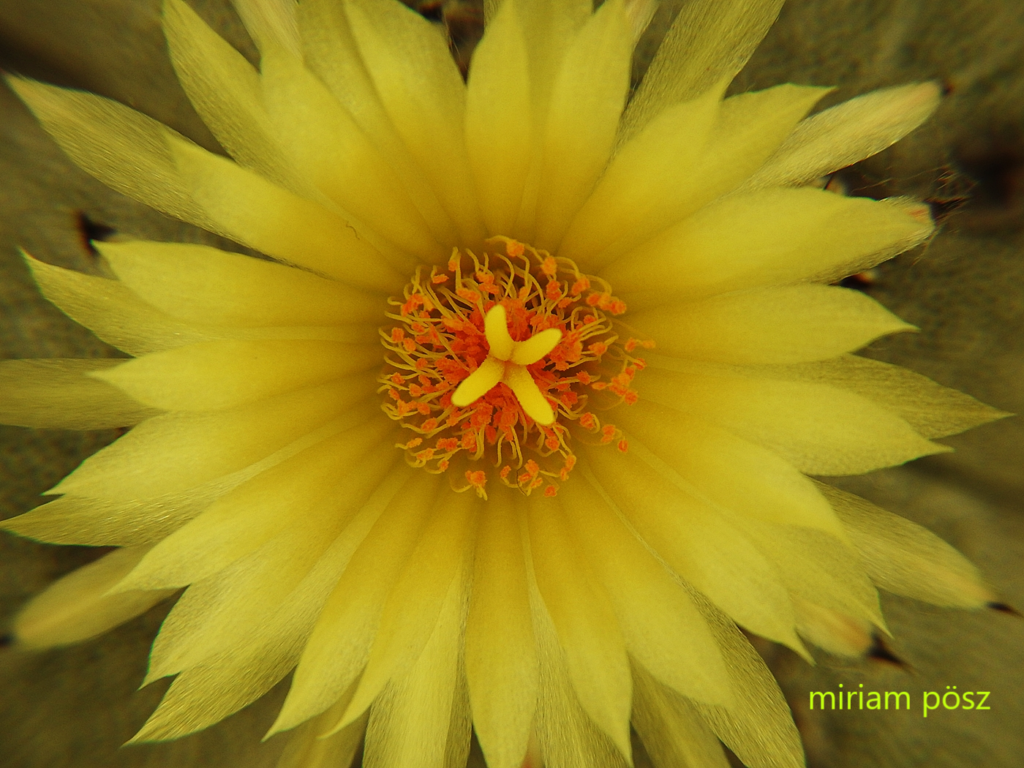
Photo: @miriampösz

The Brotherhood of Birds

@miriampösz

Lord…
I have been, perhaps, a branch of a tree,
a bird’s shadow,
the reflection of a river…

J. L. Ortiz

Birds live in our gardens, on our balconies, in our neighborhood trees. They offer city dwellers the only opportunity to live with wild animals (even gentle creatures such as birds are technically wild, ie “not domesticated”). How many of us pass up this gift without opening it? We praise their inspired song; we envy their ability to fly; but mostly we lead our lives as if they didn’t exist, or at least as if they were ornaments – beautiful but fortuitous – part of the scenery.

Other cultures are connected to the winged world in a different way. The San people, who live in the Kalahari Desert, explain it like this:

“If one day I see a bird and I recognize it, a fine thread forms between us. If I go out tomorrow and I recognize the same bird, the thread thickens a little. Every time I see and I recognize the same bird the thread grows until it becomes a rope. We have ropes connecting us with all the aspects of creation, with the whole universe.”

It may seem utopian to believe we could regain that level of connection with nature when we so removed far from the green nation and move at such a frenzied pace. Today, not only do we not bond with the birds that surround us but we suppose that the birds we come across are always different individuals that randomly cross our path. The opposite is true: because they are territorial animals, birds make their life in a home area within a radius of about ten to twenty meters. Once they identify a place and recognize its hiding places, its sources of supply and shelter, they don’t abandon it easily. Therefore, the birds we see every day are no more and no less than our neighbors. With a bit of patience and dedication we can learn to know them and even to distinguish one from another by some individual trait.

Why would we want to bond with birds? For our ancestors these animals were allies in their most important task: to defend themselves against predators and to detect prey. Birds alerted them to the presence of both with their movements and sounds, and thus rendered humans an indispensable service. Today, we no longer need them to survive, but if you can learn what professional tracker Jon Young called  “the deep language of the birds” (in What the Robin Knows: How Birds Reveal the Secrets of the Natural World), your world will acquire unsuspected wonders. What does he mean by “deep language”? He is talking about a species-to-species communication, full of information encoded in vocalizations and bodily gestures, that is practiced by the creatures that surround us.

Young is an enthusiastic promoter of the idea of diving into nature in order to rediscover the native who lives in the heart of even the most entrenched city dweller. He has initiated a great many people in this art and in so doing has  helped to give confidence and a sense of belonging to at-risk adolescents and members of other vulnerable groups, through transformative experiences in nature.

Young’s first piece of advice for learning to re-establish the bond is simple: choose a “sit spot” close to home. It can be a bench in a square or a chair on your balcony or terrace, or in your garden. You should sit there every day for at least ten minutes, notebook in hand, to observe what happens. Young calls this “going out to listen to the news of the day.”

At first you may not notice anything at all. But once you learn to silence your mind, you’ll slowly start to read your environment like a musical score. But first, in order to be able to observe birds in action, instead of always catching them mid-flight, you will have to learn to develop four simple skills:

Owl vision. This consists of broadening your field of vision: widening your gaze to include the periphery; trying to capture as much visual information as you can, without moving your head or your eyes. This reassures birds and invites them to carry on with their lives as if you were not there. If you are walking, a variation is to face the other way and look over your shoulder at the bird, so it won’t notice you observing it.

Deer hearing. To sharpen your hearing, try to distinguish between sounds near and far. This will allow you to gather information about what’s going on with other birds that aren’t in your environment. You’ll also be able to make connections between events happening in different parts of the neighborhood.

Fox walk. Put your heel down first and then, gradually, the ball of your foot. This step produces a silent and unobtrusive walk, and at the same time shelters you from stepping on something potentially harmful, as your foot will “feel” the ground before it descends completely.

These three techniques will provide you with a sort of cloak of invisibility so that you can watch nature in peace. More importantly, they will generate a state of relaxation similar to that of any other contemplative practice (extra points if you discover this state before the last chapter, “The Lighthouse”). Young says that a common mistake made by people when they start bird watching is trying to be “stealthy”. Stealth alerts a bird to your presence because it is the attitude of a predator; what you seek is not stealth, but a state of inner peace and silence.

In any expedition to observe nature it helps to visualize two circles: one representing the circle of your perception, and the other the disruption caused by our presence. The idea is to enlarge the first circle as much as possible, and shrink the second in order to achieve the perfect sweet spot which enables you to watch wildlife unobtrusively.

In his book Young talks about the experience of a young man from a slum of New York who took his course as part of a social program. At the end of the first ten-minute observation period, the boy had not written down a single event. “Nothing happened,” he said, laconic and bored. On the second day, he wrote in his notebook that “a bird flew past me to my right.” After a week, he was already able to distinguish the thrush from the great kiskadee and to record that the one had stolen food from the other a few meters from his bench, while the parrots cackled excitedly in the branches of a eucalyptus. This small transformation bears witness to the fact that when we pay attention, the world expands; it becomes populated with beings, teeming with life. By applying these practices, Young says, “Birds become barometers for our awareness of the inner and outer landscape”.

They also produce another unexpected result: the child within you is suddenly revived, as if invited to play after years of confinement. Who doesn’t dream of being an explorer and going out to discover the secrets of the universe; more so when those secrets fly past us in front of our noses?

Let us see what we can learn from the winged kingdom, without the need for books or binoculars, through the sheer force of listening and curiosity.

Why they sing

There are five types of sounds that we can learn to recognize:

Song. This is by far the most studied – and enjoyed – of all bird sound. It differs from the call by its duration and complexity. Each bird has a basic “repertoire” of songs and calls, but this includes many variations according to the time of day, as we shall see.

Companion call. This is the sound birds use to communicate with each other and to announce to their peers their location or where to find tasty snacks. It is very recognizable in the great kiskadee: a high-pitched whistle that alerts the whole neighborhood (as well as its addressee). Subtlety is not one of the attributes of this species.

Juvenile begging. This is the hunger cry of the chicks. It is emitted with an open beak in the nest or when running behind a parent as the chick takes its first steps. You hear it mainly in spring, in the breeding season, and it is not necessary to train your ear much to recognize it. It is so clear that it awakens maternal instincts even in non-feathered animals.

Aggression. This is emitted especially by the males, in reaction to territorial threats. Often it accompanies a ritual display that seeks to dissuade an intruder or to mark territory rather than develop into a physical conflict. Birds, both male and female, are renowned for the displays they make to protect their nests, sometimes to warn off predators several times bigger than themselves.

Cry of alarm. There are different cries for different occasions. Some species have a specific alarm for terrestrial dangers and another for aerial threats. The click that thrushes make when a human intruder gets too close to a nest also belongs in this category.

In order to be able to recognize these different sounds it is necessary to first learn to discern the “baseline” of each species: its habitual behavior when all is calm and life is normal. Once you have learnt to distinguish this, it is easier to detect when something is happening that deserves your attention.

A good opportunity to observe that baseline is when birds are eating. You can take advantage of that moment to study their body language and sounds, so that you can contrast them with other behaviors when they appear.

The mystery of birdsong

Birdsong is a fascinating and mysterious form of behavior. We may ask: why do they sing? After all, singing is an activity that requires a lot of energy and can attract the attention of predators. In principle, there are two main reasons on which ornithologists agree: to defend territory and to attract potential mates. For the male, singing with vigor and dexterity is a way of showing off his attributes and getting females to listen to him.

But there is another way of looking at this, proposed by professor of Music and Philosophy David Rothenberg. In his book Why Birds Sing, Rothenberg accepts the reasons given by science, but allows himself to speculate about a third option. He says:

“Why do birds sing? For the same reasons we sing – because we can. Because we love to inhabit the pure realm of sound. Because we must sing – it’s the way we have been designed to tap into the pure shapes of sound. We celebrate this ability in our greatest tasks, defining ourselves, defending our places, calling out to the ones we love. But form remains far more than function”.

When he speaks of “form”, Rothenberg refers to the almost implausible elaboration and ornamentation of some songs. It is difficult to imagine why the lyrebird of Australia needs to perfectly imitate dozens of sounds (of other birds, of nature and also of elements of civilization such as flutes, cameras, car alarms and chainsaws) in order to be considered a fit mate by some exquisite female.

It is not only songs that seem to overcome utilitarian arguments: there is also the sense of aesthetics of the bowerbird of Australia and New Guinea, which color their nests with objects they find on the forest floor; and the choreographic talent of birds of paradise, found in the same corner of the world, which perform dance steps that could have inspired Michael Jackson’s moonwalk.

Could it be that some birds just enjoy singing, dancing, flying and displaying their beauty and their gifts? Let’s make room for that possibility in the infinite mystery of the world.

Nevertheless, it must be said, courtship songs are the most striking. In almost all species it is the males that sing (except in the tropics, where both members of the pair sing in duet, and among Argentine ovenbirds). The most spectacular displays occur in spring: first for sexual conquest and then to mark territory.

Songbirds are blessed with a syrinx (avian version of the larynx), an organ located where the trachea divides into the bronchial tubes. Each side of the syrinx produces independent sounds, allowing a bird to emit two different tones at the same time. Some birds can even sing ascending and descending notes simultaneously. One species, the northern cardinal (Cardinalis cardinalis) can sing more notes than there are on a piano in a tenth of a second.

Although each species has a “base song”, when a colony is isolated from the rest by some geographical accident its members may end up developing their own “dialect” which they then pass on to their off-spring. That is why birds of the same species can intone different melodies. Can we sensitize our hearing enough to hear these variations?

On YouTube there are many recordings of songs and sounds of each species. Listening to them is a way of training your ear to recognize those which live in your vicinity. You have probably heard them thousands of times, but without relating the bird to the song.

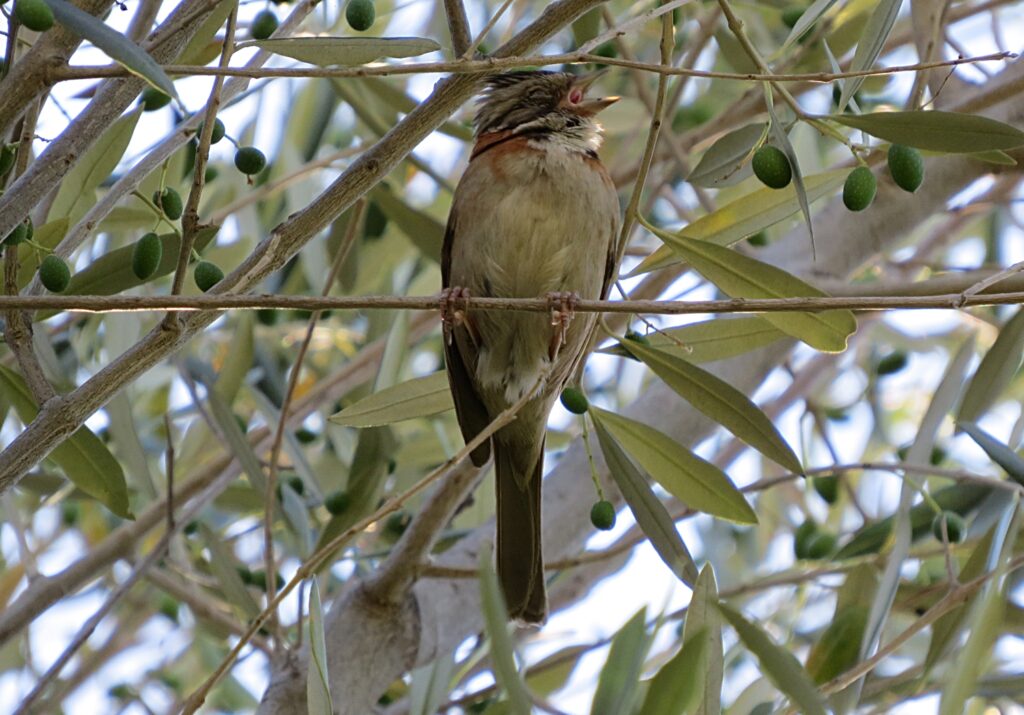
Here are some birds with well-defined songs, which you might listen out for depending where you are in the world: rufous-collared sparrow, sparrow, thrush, great kiskadee, song thrush, blackbird, skylark.


Excerpt from Where Wonder Lives. Practices for Cultivating the Sacred in Your Daily Life.

Entusiasmo y posibilidad

Activating Enthusiasm!

Entusiasmo y posibilidad

What is enthusiasm, that vital force that the Ancient Greeks described as “having a God inside” (the etymological root of the word)?
Is it a gift, a character trait, a way of looking at life?
Can we “reset” ourselves to live with more energy and vitality, even when circumstances are difficult and times uncertain?
And, if so, through which strategies, practices and choices?

Some of the topics we will cover:

  • The differences and similarities between awe, inspiration, enthusiasm and obssession.
  • From enthusiasm to ecstasy: What are the higher rungs of the joy ladder, and why are they often discouraged in today’s society?
  • Key questions to ask yourself, to discover your own personal road to enthusiasm.
  • Enthusiasm as a choice, an attitude and a way of life.

Format: Vía Zoom. Afterwards you will receive the video, audio, poems we shared and notes on the main points covered.

Date:  February 13th, 1 PM PST / 4 PM EST

Duration: 3 hours (with a brief coffee break in the middle).

Tuition:  None! I would love to be able to share these ideas and practices with you, and to have you share them with your loved ones. I believe we need all the enthusiasm we can muster right now, so that we can take on this important year with our best energy!

Questions/sign up: info@fabianafondevila.com

REGISTRATION

Error: Contact form not found.

An invitation to wonder

An invitation to wonder

My name is Fabiana Fondevila and I am an author, teacher and ritual maker from Buenos Aires, Argentina. Welcome to my new channel! I created this video to share a little bit of the inspiration behind my upcoming book, Where Wonder Lives. Cultivating the Sacred in Your Daily Life (Random House).

Please come visit my garden, and let us dwell for a few moments on the life of the senses, and how it an inform an embodied and vibrant spiritual life.

Thank you for coming along!

The Renewing Power of Ritual

The Renewing Power of Ritual

The Renewing Power of Ritual

2020 is finally coming to an end. If this were any other year, it might find us booking flights to spend the holidays with our loved ones, exploring recipes, choosing presents, decorating our homes and pondering worthy New Year’s resolutions. But this isn’t any other year. This is the year that has shaken us to our core as individuals, as families, as communities, as a species.

Most of us will not be able to gather with our loved ones. Many of us are grieving fresh and devastating losses. It has been a time of great uncertainty, which will not magically end with the passing of the year. In this context, it may be tempting to ask if celebrating even makes sense at all.

As a first response, we might recall a story told by Holocaust survivor Elie Wiesel. The Jewish writer once shared how, while living as a prisoner in Auschwitz, he watched a fellow prisoner trade his daily ration of bread for some simple materials with which to piece together a makeshift menorah. Astonished at the sacrifice this man was making to observe the holidays, Wiesel asked the man, “Hanukkah in Auschwitz?” The man replied, “Especially in Auschwitz.”

What did Wiesel mean? Why was honoring a religious holiday so important in a place where everything that was familiar and sacred had been taken away? Precisely for that reason. When the usual scaffolding of our lives has been dismantled, when the comforting routines that sustain us have all but disappeared, then ritual and ceremony become vital nourishment, perhaps as never before.

What are rituals? There are as many definitions as scholars who study them and people who perform them. I can humbly offer my own: A ritual is an embodied symbolic act through which we render visible the invisible values, emotions, and insights that are most essential to us. For example, transcendent emotions such as love, awe, grief, gratitude, compassion, longing, forgiveness; values such as courage, kindness, humility, justice; the memory of those no longer with us; the lessons of our forefathers that we want to keep alive; our personal and collective milestones.

By embodying those inner realities and bringing them out into the world, in symbolic form, we give them a proper place in our lives, we allow ourselves to experience the emotions they evoke in us, and we share them with our communities

More specifically, here are some of the functions of ritual and ceremony in our lives:

  • To create or strengthen bonds between people.
  • To serve as reassurance and stability during a crisis.
  • To forge a bridge between the past and the present and recall the elements of the founding myth.
  • To distinguish kairos (soul time) from chronos (calendar time).
  • To help heal body and soul.
  • To recognize and usher in changes (rites of passage) in age, stage, and life cycles, while at the same time keeping participants connected to what is deep and unchanging.
  • To consecrate new statuses, roles, and skills.
  • To help us say goodbye.
  • To engage in a form of adult play, with a serious purpose and meaning.
  • To honor the sacred at the heart of everyday life.

We often associate ritual with time-honored traditions that are passed down across the generations. While it’s true that repeated gestures, symbols, and songs can be powerful and reassuring, we are beginning to understand that created or improvised rituals can be just as effective, and perhaps even more genuine, as they are adapted to the needs and sensibilities of those who perform them.

In fact, as scholars like Ronald Grimes and Sabina Magliocco point out, in the face of the growing secularization of Western societies (which has left us with a reduced repertoire of rituals), and the commercialization and appropriation of ritual occasions (which has impoverished those that remain), new rituals are emerging all around us to fill the gap. These newly minted rituals respond to the needs of current generations: They celebrate women’s autonomy and empowerment, protest racial discrimination, redefine families, redesign our ways of facing death. Most importantly, they help to usher forth social transformation.

The Renewing Power of Ritual

Author Esther Perel tells of her experiences attending Burning Man, one such current day collective ritual. “[It] provided me with an immersive, secular ritual of remembrance I’d never known was possible. By day seven, the once empty temple formed a living memorial. In pictures, poems, objects, artwork, and other shreds of lives gone, thousands of people responded to their individual loss and our collective impermanence. I saw the entire drama of human experience laid bare and then burned away.”

All along in our private lives we have been enacting ceremonies, even though we might not have thought to call them by that name: Friday night dinners, book clubs, gratitude circles, contemplative walks, Crossfit, Soul Cycle and other fitness trends that have communal aspects. All of these spontaneous ritual gatherings have served somewhat the same purpose as ancient traditions (minus the religious underpinnings): they forge bonds, make friends out of strangers, help us quiet down and come back to ourselves, and instill a sense of connection and meaning — without preordained roles, scripts, or authority figures.

In his book The Power of Ritual, Casper Ter Kuile emphasizes the way such spontaneous rituals can help satisfy our deep and abiding need for community and belonging. But in order to get the full benefit from these activities, we must be intentional about them. And this brings us to one of the most important aspects of any ritual: intention. Whatever activity we are undertaking, we must stop and ask ourselves: What does this mean for me? What do I want it to mean? What do I wish to honor, celebrate, grieve, remember? Intention plus our full attention turns any activity that we deem worthy into a life-enhancing, sacred act.

Some authors also underscore the importance of repetition. Although repetition does help inscribe an act into our daily or weekly routine, proclaiming its importance, rituals can also be powerful as a one-time only event.

Lastly, the form and exact design of a ritual is, perhaps, the least important. In the chapter entitled “The Fire,” in my book Where Wonder Lives, I tell a short Hasidic tale about a village where a rabbi lived. Every time there was a hardship, the village people followed the rabbi to a certain tree in the forest and performed a certain ceremony. Many hard times ensued, and generation after generation disappeared. Finally, there came a time when the young people went out into the forest to perform the rite. But they couldn’t find the tree nor remember the songs or prayers. So they picked a tree, and they said the few words they remembered, the bits of song they could still sing, and that was enough.

So here we are, rounding the bend of this year, facing our own collective rite of passage. How are we to say goodbye to a year that has challenged our very ways of understanding the world, our role in it, and the future we want to build?

We can resort to ritual creativity, and find our own way to honor what each of us has learned as well as what we would like to carry forward into 2021. Here are some ideas:

  • If this year drove home the importance of holding close those dearest to us, could we, perhaps, ritualize our intention to never again take each other for granted?
  • If we are awed and moved by how Nature flourished during our absence these past months, could we commit ourselves to being better stewards by planting a tree, feeding the birds in our yard, cleaning up a nearby park, deciding on a weekly day off from driving?
  • If we learned that distance is no barrier when there is genuine connection, can we organize a virtual festivity for the ages, remembering that, as Mary Oliver writes in her poem “The Messenger,” “all the ingredients are here”?

At first, we might feel awkward creating a ritual from scratch. But we can trust the ritual intelligence that inspired our ancestors (and that we have inherited, whether we know it or not), decide what it is we want to consecrate (make sacred) with our time and attention, and find the words and the gestures that feel natural for us. Some will work, some will need some fine tuning, but if they ring true to our hearts, we will be stepping on hallowed ground.

To nudge us along, here again is Mary Oliver, with her timeless advice: “Let me / keep my mind on what matters, / which is my work, // which is mostly standing still and learning to be / astonished.”

How will you give voice to your astonishment as you bid farewell to this year and welcome the next?

What images or symbols will you choose to honor it?

What will you make sacred today, and how?

Awakin Call with Fabiana Fondevila

How Does Wonder Show up in Your Life?

Nuggets From Fabiana Fondevila’s Call

Last Saturday, we had the privilege of hosting Awakin Call with Fabiana Fondevila.

Fabiana Fondevila is an Argentinian writer, speaker, teacher, and all-around wonder activist. She began her career as a journalist and war correspondent, working for the main outlets in her native country. Returning to spiritual questions, she then spent years interviewing some of the world’s top thinkers, mystics, scientists and philosophers in search of a map. And then, life transpired: her older sister took her own life after a lifetime of mental illness, and Fabiana’s parents died shortly before and after, undone by the pain. This led Fabiana deeper into the path. But this time, no books or schools or lineages seemed potent enough to shine a light in the darkness. By chance, she stumbled upon weeds in her garden that steered her to a treasure trove of ancient plant wisdom. Weeds led to trees, trees to birds, birds to clouds, and through this muddy, verdant trail she found her way back to herself.

Below are some of the nuggets from the call that stood out for me …

“It’s been a slow homecoming [to wonder]. Awe and wonder are an ongoing experience, a daily experience. … It’s actualized everyday, it’s not something I need to look for. It happens; it’s just there. Last night, I was sitting in my backyard … under the stars in silence, it opens up a world of meaning and vitality that’s so readily available.”

Nature as an Early Teacher of Wonder: “The earliest instances of wonder came via my contact with nature. My parents bought a piece of land when I was about eight years old. It was a piece of land in the middle of nowhere, and they never actually got around to building a house — we never had the money to build a house — on it. But we went there, every weekend, just to imagine that we could live and have a house there. It was a very wild place… the grass was sometimes up to our noses when we got there, because we had no one caring for it. And running around, the Eucalyptus, the smell of the earth, the wild plants — all of that combined opened up a door, to me, of the sacred. Of course, I didn’t call it the sacred then, but to me, it was a transformative feeling. A feeling of being alive that I hadn’t had before when I was going to school or watching television. That is in the background of my path and journey with nature and these explorations. When I had my children, and they were young, and when you have children, you recover that [awe and wonder] part of yourself in a way.”

A Different Kind of Daily News: Towards the end of her time working in journalism, Fabiana describes, “I began to move away from the everyday news, and the politics and the economics and the daily matters of the world, into another kind of daily experience, which is echoed by John Young, who’s a bird watcher, and bird “knower” (more than watcher — he talks about the bird language). He says every morning he goes out to his “sit spot,” (he calls it) to listen to the “daily news”. So that’s the kind of daily news that I am most moved by these days. I do try to not stray too far from them, and it’s not difficult because whatever is going on in my life, or even in the world in this very strange year, which we’re all concerned with, the sky is always there for us. The trees are always there for us. The wild plants are doing their thing, and so are the birds. And the rest of nature is beckoning us to come out of our small understanding of reality. That’s been such a rich and fertile path for me.”

From Journalism to Naïveté to Innocence to Wonder: After stepping away from news journalism, Fabiana wrote an article called, Dare to be Naive! “Today, I might not even use the word, ‘naive’. It’s funny how we change the way we think about these things. At that time, I was sort of giving myself permission to wonder into these territories that included such things as looking at a pigeon making her nest on my windowsill — and considering that the most important thing I could do that day — and just finding out which one was the male, which one was the female, and what was going to happen to those eggs. … I suppose I felt a little guilty about leaving behind more worldly affairs, so I was giving myself permission and encouragement to explore these areas of life. But today, I say I would perhaps not even use the word “naive,” because I think there is a little bit of a critical element to the word, “naive”. I think I would say “dare to be innocent”. Innocence is not a denial of reality, or a looking away, but simply a looking at life with fresh eyes and an open heart, and with wonder. That’s now the lens that I mostly use to look at everything, and I don’t consider it naive, I just consider it a different vantage point.”

On Wonder: “Wonder is only connected to positive emotion. Awe is the same emotion but with “scarier” thoughts associated with it. Wonder, awe, and astonishment are the emotion that arises in one in the face of something so vast and so powerful, and so transcendent and so unexpected, that it makes one rethink what you’re looking at, because you can’t comprehend it; you can’t quite take it in on one side. The first reaction is what happens to our breath. To me that seems very telling. You know when you see a very majestic night sky … or a piece of music or art, or a supremely kind act — anything you feel that is so huge and encompassing that you can’t take it in. What you do, instinctively, is you sort of hold your breath for a moment. Right? We go, “Ahh!” [gasp] … That gives us a bit of a clue as to what’s happening. Here, I’m quoting researchers who I respect a lot and whose work I’ve been reading for years — Dacher Kelter … and other awe researchers — they found that what awe does is it submerges you in the present for that time, however long it lasts. There’s no past, there’s no future, you’re not worried about anything… You’re there, completely at one with what’s happening. So this suspension of breath seems to me like — and maybe this is a symbolic or intuition of mine — it’s as if you want to make room for it and there’s no room in your chest, so you take in this big gulp of air. And then you sort of hold it for a moment, as everything stands still. At the same time, the other important thing that happens in moments of awe, is that not only are you completely present, but you’re also in the presence of something incredibly vast. That gives you a sense of humility and of being smaller and insignificant, but at the same time, you don’t feel disconnected from what you’re seeing — you feel part of it. So what you’re really feeling is: you are part of this unending, infinite marvel that is the world — that is life. And that causes an expansion, and a subversion, of our normal ways of thinking that, actually, leaves us transformed. … It’s not something that you just feel — it really does happen that after a moment of awe — if they ask you questions, for instance, if you’re looking at a large tree and other people looking at buildings. Those, after looking at trees, they answer questions that they had answered before, and in the second time, they say things like: they are more satisfied with their lives, they feel like they have more time (which is interesting, because time is a factor in awe), and they are willing to donate their time (because they feel more connected to humanity and the world). So this is all subconscious; we’re not thinking about this when it happens, but this just happens. Because what really happens when we are in the presence of awe, is that we are in the presence of mystery. And mystery becomes undeniable. It’s something that — when you’re seeing and feeling it, you can’t un-see it. So what I think this emotion is about — which I consider one of the most spiritual emotions — is it’s a window into the mystery. And when we allow ourselves to live it fully, and to become it, in a way, for as long as we can — to embody it — then we become what Joseph Campbell called, “transparent transcendence,” which I think is one of the pathways into the sacred that at least I am more in love with. You become transparent because you are sort of erased for that moment, and all you are is your connection to everything. So the heart is not the same after you experience a moment like that. And we all have experienced moments like this — we all look up to the sky, we see sunsets, we all see flowers, we all see children — but we’re not always open to the experience in such a way that we allow us to transform it. If, after that moment, you go back to your life and you completely let go of that experience, and you don’t hold it in your heart and you don’t let it do something to you — then it’s not such a transformative experience; it’s just a nice ‘high’ that you had in that moment, and it doesn’t leave anything changed. So my purpose with this book is to invite us all — myself included (because I want to remind myself of that everyday) — to dwell in the presence of the sacred, of the everyday sacred. And I think wonder is one of the doorways into that presence.

Rituals and Myths “Make Visible The Invisisble”: “The mystical insight that gave birth to different religions had to be translated into actions — actions that would usher forth these feelings, and place them in the world and give them a language. So ritual is a natural way of connecting — I would say it’s a symbolic way of connecting the sacred — the visible world to the invisible world. We need ritual to make visible the invisible. … It’s always talking about something that is not of the visible nature, but, rather, is speaking of deep and profound insights that we need to bring out into the world. Joseph Campbell said ritual was the enactment of myth. If myth is a way of looking at the world … Myths are these stories that we tell ourselves to understand what life is about — to guide ourselves through life — to give us a path and direction, so to speak, to have a good life, to have meaningful relationships, to face difficulties, to face death — if all of that is encrypted in these ancient stories called myths, then ritual is the way these stories were brought out into the world … We don’t have overarching myths today, because we’re living in a myth-less time — or at least the myths we have are not universal anymore, and some of them are not very nutritious or fertile or illuminating. But we do have personal myths; we all have stories that we tell ourselves about what is important. And I think ritual is a way to bring that into our lives in a more concrete way, and to share that with our communities. … The most important and effective rituals usually involve community.

On Loss, Grief, and Resilience: For my sensitivities, nature has always been the best company for my rituals. Mayn times, I’ve gone to a certain tree to speak to my sister and leave offerings for her. I’ve written to her and to my parents, and I’ve taken time to honor certain dates with certain actions. I’ve tended towards the simple and heartfelt, and not towards the elaborate. I’ve often involved my twin brothers … we’ve done some things together, the three of us … When my father died, I remember specifically, he died at home because thankfully we were able to take him home from the hospital. The day he died, we just sat around him and meditated together and bade him farewell in the way that each of us knew how. I think that was very important for us to do together — to take it into our own hands, and not let it be some institutionalized form (though sometimes you can’t choose ) … ritual is beyond time and space because the heart is beyond time and space. Maybe it’s all space. 🙂 Maybe that’s a way of saying it’s infinite space. Of course, we’d like to be with our loved ones and we would like to go through the rituals that each tradition and religion specifies for each moment, I think we can find some solace and comfort in knowing that we don’t need to be in a specific place to do a specific ritual in order to grieve or to say goodbye to your loved ones. You can do it from the place you’re sitting. You can do it talking to a tree, or to a bird, or make an offering to the land. Or cooking something for anybody else, and giving it out to a homeless person, or a person you love, in that person’s name. And that’s all that person needs to receive your message, or for your heart to feel it has honored that passing. Let’s be free in our ways of approaching this, because new times call for new measures and new ways of approaching ritual, but we can rest assured that the deep roots of ritual are wide enough and deep enough, to encompass any situation. People held rituals in concentration camps: they sang their songs, they had no props, no candles, only the verses in their minds. There’s an old story — it’s an old Jewish tale — there’s a village somewhere where there’s a Jewish community. They would always go out to a forest — to a certain tree — and perform a certain ritual when they had hard times. And then there are many deaths in the community — I think there was some kind of a natural disaster and many people died. So the next generation goes out into the woods, but they can’t find the tree — they can’t remember which tree it was. They just remember there was a certain tree where the elders used to go. So they find any tree and they sing the songs and they perform the ritual as best they could remember. And then there’s another catastrophe and another generation is gone. The youngsters go out into the woods, and all they remember — all that they know — is that the elders used to go out into the woods and do something. So they go out into the woods and they do something. And that is enough. And that is enough. When the heart is there, when there’s an intention to honor, then the body finds the way. The community finds the way. We really don’t need scripts for this — it’s beyond scripts. And the scripts were created by people living the same emotions, and the same losses and experiences.”

Rituals to Bridge Divides: “From an archetypal point of view … archetypes are these constellations of energies and images and impulses that live in us and through us. (For example, the nurturing instinct — the mother instinct — the lover, the seeker, the sage, the hero — these are different archetypes that form part of our myths. I was thinking recently that there are two archetypes that perhaps need to meet halfway in us, in all of us. These two archetypes are: there are two basic energies that most of us share. One is: the energy of being, and just embracing what is, and enjoying what you are and accepting what your life is. That’s the archetypal energy of the Lover. The Lover is not trying to change the person they love — they’re there to love that person and the nature and to be with what is. Then there’s this other energy, which we could call the Seeker, but also the Hero. It is all about creating what is new — going after something that’s not here already. What is a better way to do this? What is the new frontier to conquer? We need to bring those two energies together, because we need to be, and we need to do, and we need to do that almost daily. So an archetype that comes to my mind, or my heart, maybe just because I love to dance, 🙂 is the Dancer. I was thinking the Dancer is the idea of fusing — through the power of music and movement — the different aspects of ourselves that are also reflected in our relations to others. Because this other person who is speaking something so completely opposite to me, might see something that I haven’t seen. That doesn’t mean I have to leave my thoughts behind and embrace theirs, but maybe, if I can ask myself: “What can I learn from this person who is least like me? Who is most triggering to me?” That question makes room. It opens up some room so that I can maybe perhaps listen to something that I am resistant to. And that would be the role of the dancer — to bring me there and back — I come back to myself — I come back to what I cherish and know and want to put forth into the world — and then I sort of saunter or dance my way to other shores. And find what is there — and how can I incorporate some of their wisdom into mine, and bring some of my wisdom into theirs? I think there is a lot of integration we need to do between light and dark — between such heavy and difficult and painful times (such as we are living), and the capacity to manifest joy even in such times.”

A Jewish Ritual — Green Apples and Honey: “The Jews have this wonderful ritual in New Years — Rosh Hashanah. They dip green apples which are kind of sour, in honey. And they eat that. That is to remind themselves of the two polarities always being together: life is always sweet and it’s always sour. And when it’s being sweet, it’s good to remember that there will be times of sourness or bitterness ahead. And when things are bitter and sour and dark, it’s important to remember there are times of joy. … So to understand that all opposites are, in many different ways, complementary to each other. And we need the dark to be able to see the light in the first place.”

Lots of gratitude to all the behind-the-scenes volunteers that made this call happen!